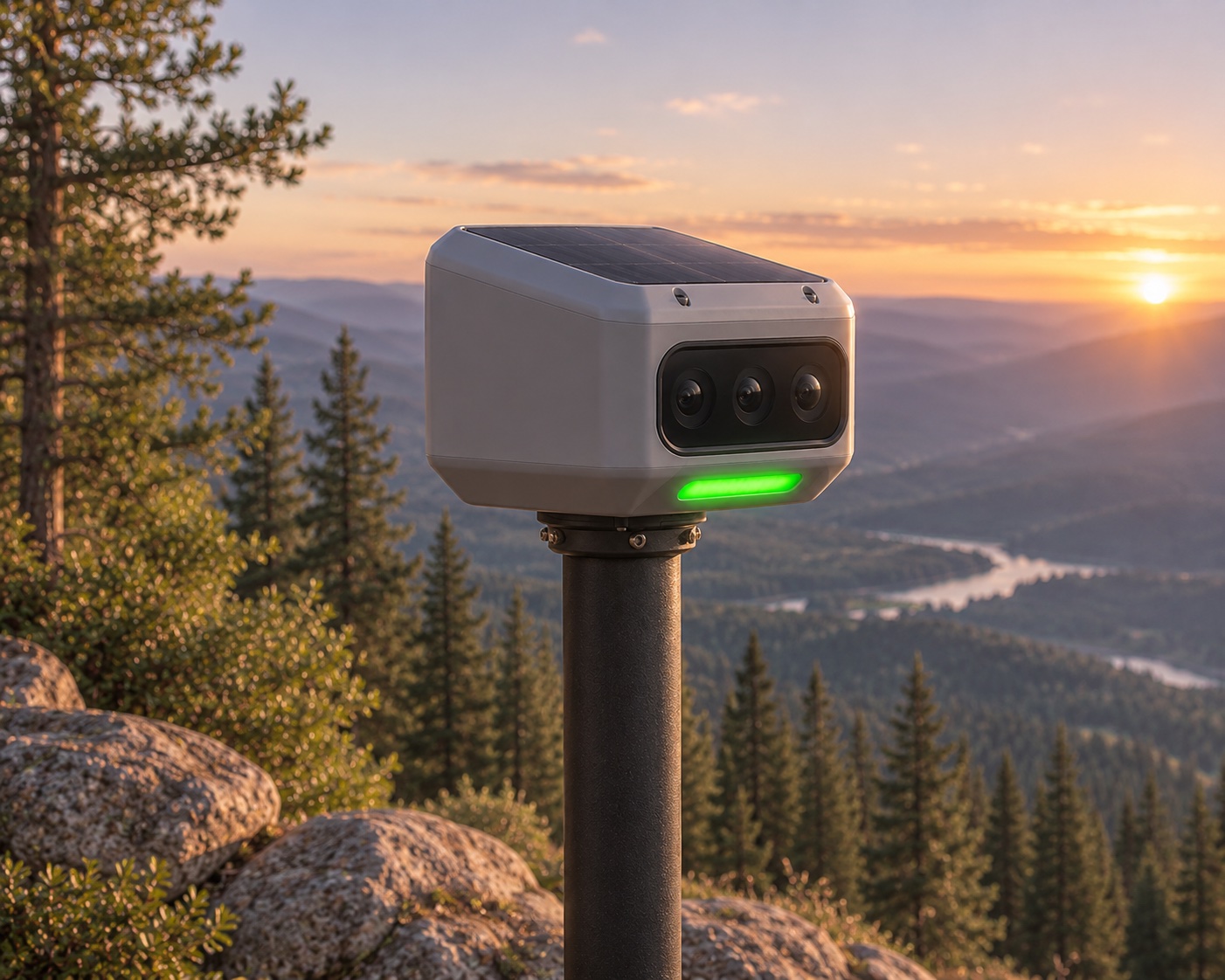
Look imaging station above a wooded valley.

Three perspectives.
One connected field.

Imaging and environmental sensing are the ground-level foundation of the system we are developing. Explore the roles of Look, Sense, and Sense-C.

Technology in development · Product visualization

Solar-powered Look unit with three imaging lenses, mounted on a ridge-top pole.
Look · Product visualization

Look from the ridge.

Look is a solar-powered imaging unit for ridge-top locations. Thermal, standard, and low-light imaging bring different perspectives to the landscape.

  • Thermal imaging
  • Standard visible imagery
  • Low-light imaging
  • Solar-powered ridge-top role

In the approach we are developing, imaging observations can identify potential fire activity and inform alerts and aerial investigation.

Explore the connected process
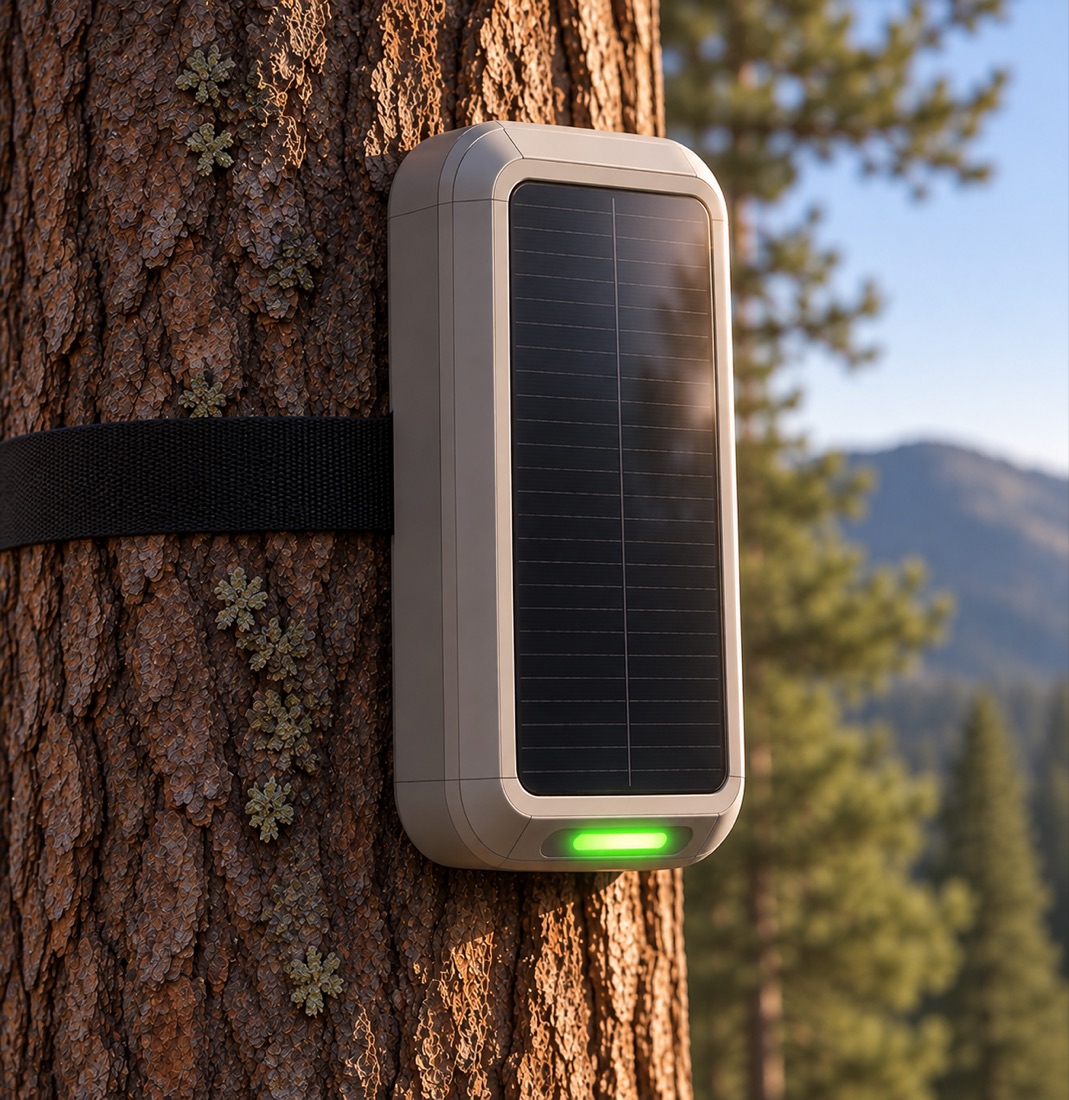
Sense sensor strapped to a tree with its solar panel facing outward.
Sense · Product visualization

Sense the conditions.

Sense is an environmental sensing unit without a camera. It adds ground-level context rather than another imaging perspective.

  • Environmental sensing
  • No camera
  • Solar powered

Its role is distinct from Look: sensing conditions in the field complements the observations made by cameras.

Discuss field sensing
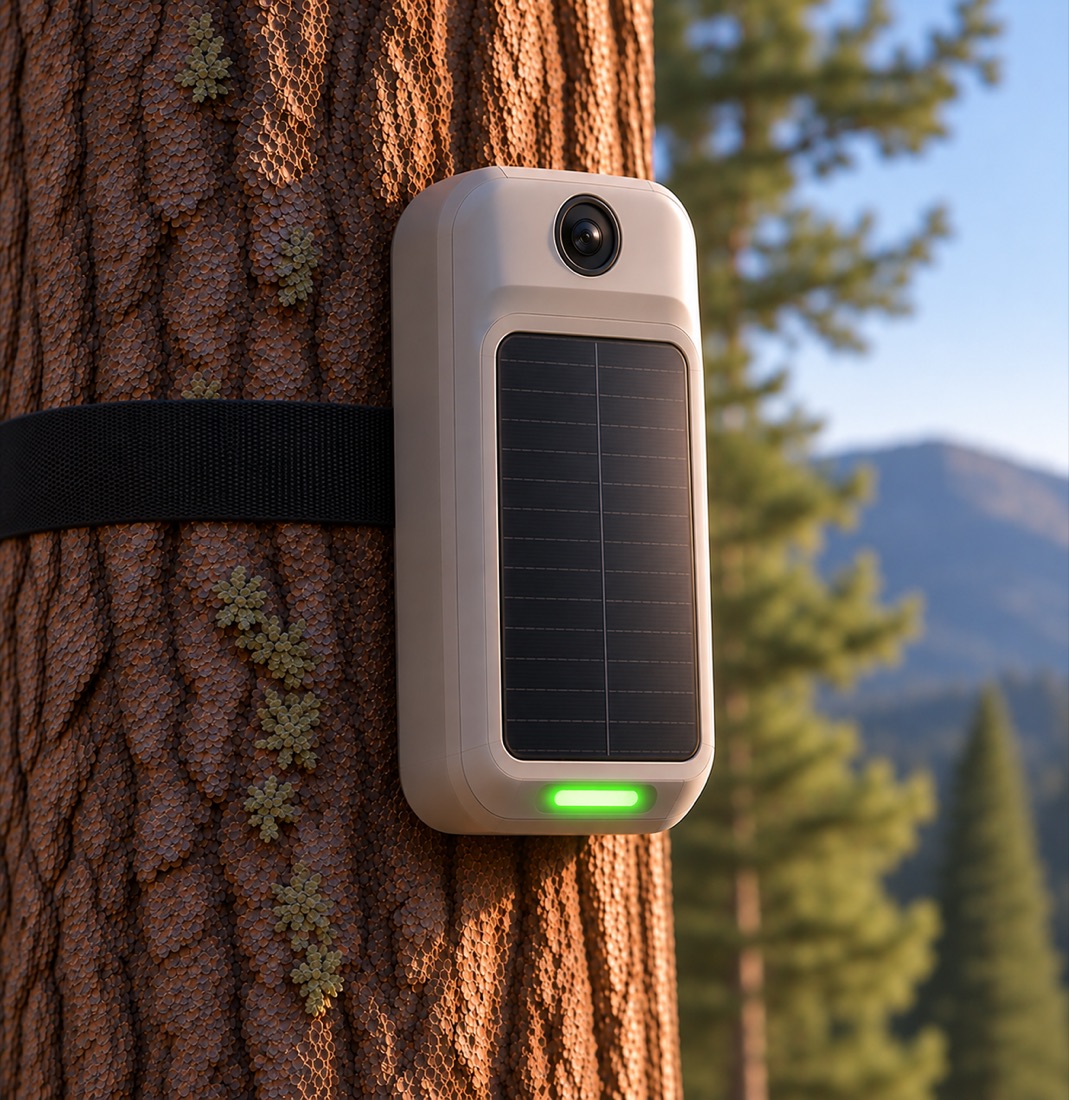
Sense-C camera and solar panel mounted on a tree with a strap.
Sense-C · Product visualization

Add a closer look.

Sense-C combines environmental sensing with a camera. It can strap around a tree or mount to a wall, adding an imaging perspective closer to the site.

  • Environmental sensing with a camera
  • Tree-strapped or wall-mounted placement
  • Solar powered

Discuss the site and the observations you need with Flown to understand the different field-device roles.

Discuss your site

A device is part
of a landscape.

Terrain, weather, visibility, and connectivity all matter to the monitoring conversation. The images illustrate device roles; they do not establish coverage, detection accuracy, or response times.

Bring us your site questions